Recycling Laws- New Jersey
Welcome to Blue Polymers’ latest blog update, where we embark on a journey through the dynamic landscape of sustainable practices in the heart of New Jersey. In this insightful post, our mission is to illuminate the nuanced details of the state’s pioneering Recycled Content Mandate, with a special spotlight on the impactful policy S2515. As a pioneering force in the realm of recycling manufacturing, Blue Polymers takes pride in not only producing top-tier post-consumer recycled resins but also in serving as your beacon of knowledge. We are dedicated to ensuring that you stay well-versed in the ever-evolving realm of state recycling laws, empowering you with the insights needed to navigate and thrive in this eco-conscious era. Your business’s success is intertwined with the changing tide of environmental regulations, and we stand committed to guiding you through the intricacies, helping you transform challenges into opportunities. Let’s dive deep into the transformative landscape of New Jersey’s commitment to sustainability, with a focus on the groundbreaking S2515 policy.
Understanding the Mandate
The cornerstone of New Jersey’s commitment to sustainability, the Recycled Content Mandate, as articulated in the pivotal S2515 policy, is a forward-looking initiative poised to shape a greener and more environmentally conscious future. Commencing its impact from January 2024 and extending its influence through 2045, this mandate represents a comprehensive approach towards fostering sustainable practices within the state. The policy strategically directs its focus on key product categories, acknowledging their pivotal role in influencing the overall ecological footprint. By introducing tiered requirements for post-consumer recycled content, New Jersey not only places emphasis on environmental responsibility but also propels businesses towards more eco-friendly practices. As we delve deeper into the specifics of S2515, we unravel a blueprint for a sustainable future where responsible consumption and recycling take center stage, ushering in a transformative era for both businesses and the environment.
Product Categories Affected and the 2024-2026 Mandate
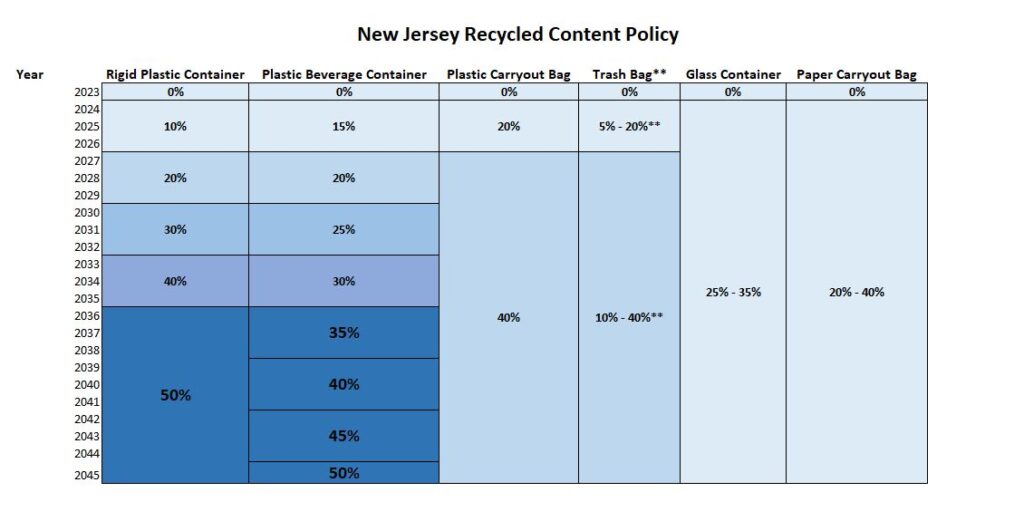
Under the comprehensive umbrella of the New Jersey Recycled Content Mandate, the legislation significantly impacts key product categories, each playing a pivotal role in the state’s sustainability narrative. The mandate, which now officially requires:
Rigid Plastic Containers: With a commitment to achieve a 10% Post-consumer recycled content (PCR) mandate, this category includes robust plastic containers that maintain their form while empty or holding other products. Picture the durable, reusable plastic containers commonly used for storing liquids or food items.
Plastic Beverage Containers: The mandate sets an ambitious goal of 15% Post-consumer recycled content (PCR) for individual, sealed plastic containers. Think of the ubiquitous plastic bottles and cans that house a variety of beverages, emphasizing the importance of recycling in the beverage industry.
Plastic Carryout Bags: In a bid to enhance environmental responsibility, the mandate calls for a 20% Post-consumer recycled content (PCR) in plastic carryout bags. Envision the bags provided by stores to customers for the convenient and eco-friendly transportation of purchased goods, a crucial focus in reducing single-use plastics.
Trash Bags: Recognizing the diverse nature of trash bags, the mandate introduces tiered requirements ranging from 5% to 20% Post-consumer recycled content (PCR), contingent upon the bag’s thickness. Whether it’s the sturdy can-liner bags, kitchen bags, or compactor bags, the mandate encourages a gradual shift towards increased recycled content, aligning with the broader vision of a more sustainable waste management system.
By delineating specific targets for these product categories, New Jersey’s mandate not only champions environmental sustainability but also encourages manufacturers and consumers alike to actively participate in the state’s collective effort towards a greener and more responsible future.
Key Policy Definitions
Post-Consumer Recycled Content stands as the linchpin of New Jersey’s sustainability drive, embodying a commitment to circular economies and responsible resource management. This crucial term encompasses materials or products that have gracefully completed their intended life cycle, fulfilling their primary purpose in the hands of consumers. Once these materials reach the end of their utility, they undergo a transformative journey, being meticulously separated from the solid waste stream. This segregation marks the beginning of a new chapter for these items, as they are designated for collection and subsequent recycling.
In essence, the term underscores a paradigm shift towards a more conscientious approach to waste, emphasizing the importance of diverting materials away from traditional disposal methods. Post-consumer recycled content signifies a commitment to repurposing, breathing new life into materials that have served their initial purpose. It encapsulates a broader vision of sustainability, where waste becomes a valuable resource, rather than a burden on the environment.
However, it’s crucial to note that the definition draws a clear distinction by excluding secondary waste material or by-products generated from the original manufacturing process. This deliberate exclusion helps maintain the integrity of the term, ensuring that the focus remains on materials that have truly completed their intended life cycle in the hands of consumers. By excluding secondary waste and manufacturing by-products, the policy aims to promote genuine recycling efforts, steering clear of practices that might dilute the sustainability impact of recycled content. This refined definition acts as a guiding principle, shaping the narrative of responsible consumption and recycling in New Jersey, reinforcing the importance of genuine post-consumer recycled content in the pursuit of a circular and eco-friendly economy.
Product Category Definitions
Rigid Plastic Container:
These containers, characterized by their unyielding shape and structural integrity, are a familiar sight in households and businesses alike. Think of the durable plastic containers that house a variety of products, from condiments and sauces to personal care items. These containers often find their way into daily life, contributing to the storage and preservation of goods. As New Jersey’s legislation propels the adoption of a 10% post-consumer recycled content mandate, consumers can anticipate a shift towards more sustainable and eco-friendly packaging choices. The containers we use to store and transport goods will gradually evolve, reflecting a commitment to reducing environmental impact without compromising functionality.
Policy Definition: a container made of plastic that has a relatively inflexible finite shape or form, has a minimum capacity of eight fluid ounces or its equivalent volume and a maximum capacity of five fluid gallons or its equivalent volume, and is capable of maintaining its shape while empty or while holding other products.
It is crucial to note that rigid containers used in food contact are temporarily exempt until 2027. Starting in 2027 the exemption will be lifted and 20% PCR will be mandated.
Plastic Beverage Container:
The individually sealed plastic beverage containers we encounter daily—whether in the form of water bottles, soda cans, or juice cartons—are integral to modern convenience. By setting a mandate for 15% post-consumer recycled content, New Jersey’s legislation seeks to revolutionize these containers. As consumers, we can anticipate a surge in more environmentally responsible packaging, promoting the circular use of materials. The evolution of plastic beverage containers will not only contribute to reduced plastic waste but also encourage responsible consumption habits among consumers.
Policy Definition: an individual, separate bottle, can, jar, carton, or other container made of plastic that is hermetically sealed or made airtight with a metal or plastic cap, and that contains a beverage. “Plastic beverage container” shall not include any label, cap, closure, or other item affixed to the container.
Plastic Carryout Bag:
Ubiquitous in grocery stores and retail outlets, plastic carryout bags have long been a symbol of convenience but also a significant contributor to environmental challenges. With a mandate for 20% post-consumer recycled content, consumers will witness a transformation in the very bags that accompany their purchases. Picture a future where these bags not only serve their practical purpose but also carry a sustainable ethos, aligning with New Jersey’s commitment to reducing single-use plastics. This evolution encourages consumers to actively engage in more eco-conscious shopping practices, making informed choices for a greener tomorrow.
Policy Definition: a bag made of plastic, of any thickness, whether woven or nonwoven, that is sold or provided by a store to a customer for the purpose of containing, carrying, and transporting food, beverages, or retail goods.
Trash Bag:
Trash bags, essential for waste management, are a staple in every household. The tiered recycled content requirements based on thickness outlined in the legislation signal a notable shift in how these bags are manufactured. From 5% to 20% post-consumer recycled content, consumers can expect a broader range of eco-friendly options. As time progresses and the legislation advances, these bags will evolve to meet higher recycled content thresholds (10%, 20%, and 40% by 2027). This evolution not only supports sustainable waste management practices but also prompts consumers to reconsider their disposal habits, fostering a culture of responsible waste handling and recycling.
In essence, the New Jersey state legislation is not just a set of rules but a catalyst for a transformative shift in how we perceive and interact with everyday products. Consumers can anticipate a future where the products they use seamlessly integrate sustainability, reflecting a shared commitment to environmental stewardship.
Recycled Content Requirements for Trash Bags
The recycling landscape in New Jersey is undergoing a significant transformation, particularly when it comes to an item that is omnipresent in every household: trash bags. The state’s progressive legislation, as outlined in S2515, mandates specific recycled content requirements for these essential waste management products, showcasing a commitment to a sustainable future.
Recycled Content Requirements for Trash Bags:
2024 Guidelines:
- Trash bags in 2024 will see a nuanced approach to recycled content based on their thickness. This strategic differentiation aims to accommodate various types of bags commonly used in households and businesses.
- 0.7 mil to > 0.8 mils: At least 5% Post-consumer recycled content (PCR).
- 0.8 mils to > 1.0 mils: Stepping up the sustainability quotient, a requirement of 10% Post-consumer recycled content (PCR).
- ≥ 1.0 mils: The most robust bags, with a thickness equal to or exceeding 1.0 mils, will lead the way with an impressive 20% Post-consumer recycled content (PCR).
This phased approach in 2024 paves the way for a gradual integration of more recycled content into trash bags, creating a spectrum of sustainable options for consumers.
2027 Advancements:
- Looking ahead to 2027, the legislation takes another stride towards a greener future by advancing the recycled content requirements. This time, the focus is not only on accommodating different thickness tiers but also on elevating the overall recycled content percentage.
- 0.7 mil to > 0.8 mils: Increasing to 10% Post-consumer recycled content (PCR).
- 0.8 mils to > 1.0 mils: Doubling the commitment, with a requirement of 20% Post-consumer recycled content (PCR).
- ≥ 1.0 mils: The most substantial leap, reaching an impressive 40% Post-consumer recycled content (PCR).
By 2027, the landscape of trash bags will have evolved significantly. Consumers can expect a broader array of sustainable choices, each contributing to the state’s overarching goal of reducing environmental impact and fostering a culture of responsible waste management.
As the thickness tiers and recycled content percentages evolve, so too will the options available to consumers. Trash bags will no longer be just a means of containing waste; they will embody a conscious choice towards a more sustainable lifestyle, aligning with New Jersey’s vision for a circular and eco-friendly economy. The phased approach outlined in the legislation not only facilitates an easier transition for manufacturers but also empowers consumers to actively participate in the state’s ambitious sustainability agenda.
Stay Ahead with Blue Polymers
With our expertise in navigating the ever-evolving landscape of recycling laws and PCR regulations, Blue Polymers is committed to helping your business thrive in the era of sustainable packaging solutions. Contact us today to learn more about how we can assist you in ensuring compliance and maximizing your competitive advantage.
;)