Amidst the global drive to curb plastic consumption, Connecticut has emerged as a trailblazer in sustainable practices. In the pivotal year of 2023, the state implemented HB-6664, a revolutionary piece of recycling legislation that signifies a significant step toward a more sustainable future. Effective from January 1, 2027, this groundbreaking policy places stringent mandates on the use of recycled content in plastic beverage containers. In this exploration, we will unravel the intricacies of HB-6664 and analyze how it aligns with the overarching push for a circular economy and circularity in the plastics industry.
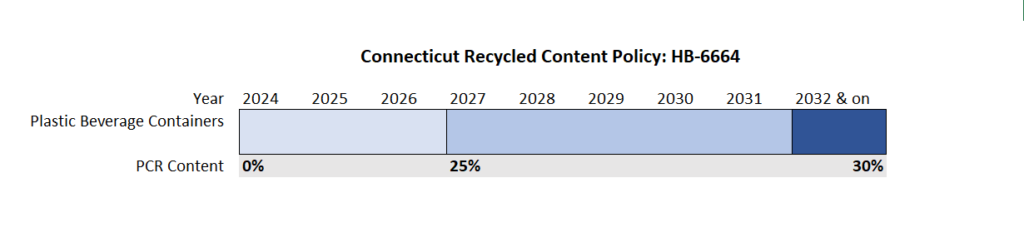
2027 Target: 25% Post-Consumer Recycled Content
Starting January 1, 2027, HB-6664 mandates that all plastic beverage containers sold, offered for sale, or distributed in the state must contain a minimum of 25% post-consumer recycled content. It’s crucial to emphasize that the verbiage of the policy is explicit in its requirement for post-consumer recycled content, explicitly excluding post-industrial or pre-consumer recycled content. This distinction underscores Connecticut’s commitment to closing the loop on plastic consumption and promoting the use of materials that have completed their life cycle in the hands of consumers.
2032 Target: 30% Post-Consumer Recycled Content
Looking forward to 2032, the policy progresses with an increased target for post-consumer recycled (PCR) content. Commencing on January 1, 2032, HB-6664 mandates that plastic beverage containers must contain no less than 30% post-consumer recycled content. This step further solidifies Connecticut’s dedication to advancing sustainability initiatives and fostering a circular economy in the state.
To maintain precision in definitions, the policy clearly outlines that a “plastic beverage container” refers to any individual, sealable bottle, can, jar, carton, or other container made of plastic and intended to contain a beverage of not more than two gallons in capacity. The definition explicitly excludes refillable beverage containers, caps, and labels from the recycled content requirement.
As we witness the evolution of legislation playing a pivotal role in driving recycled content for plastic packaging, it becomes increasingly evident that these policies are not an attack on the plastic packaging industry. Instead, they serve as a strategic pathway for the industry to defend itself and foster sustainable growth over the years to come. It is imperative for organizations to stay aligned and updated to navigate these changing landscapes successfully.
Stay Ahead with Blue Polymers:
Follow us on our journey towards sustainability and stay ahead of the curve in the ever-evolving world of recycled content legislation. Join the conversation for more information on how Blue Polymers can support your sustainable initiatives.
;)